

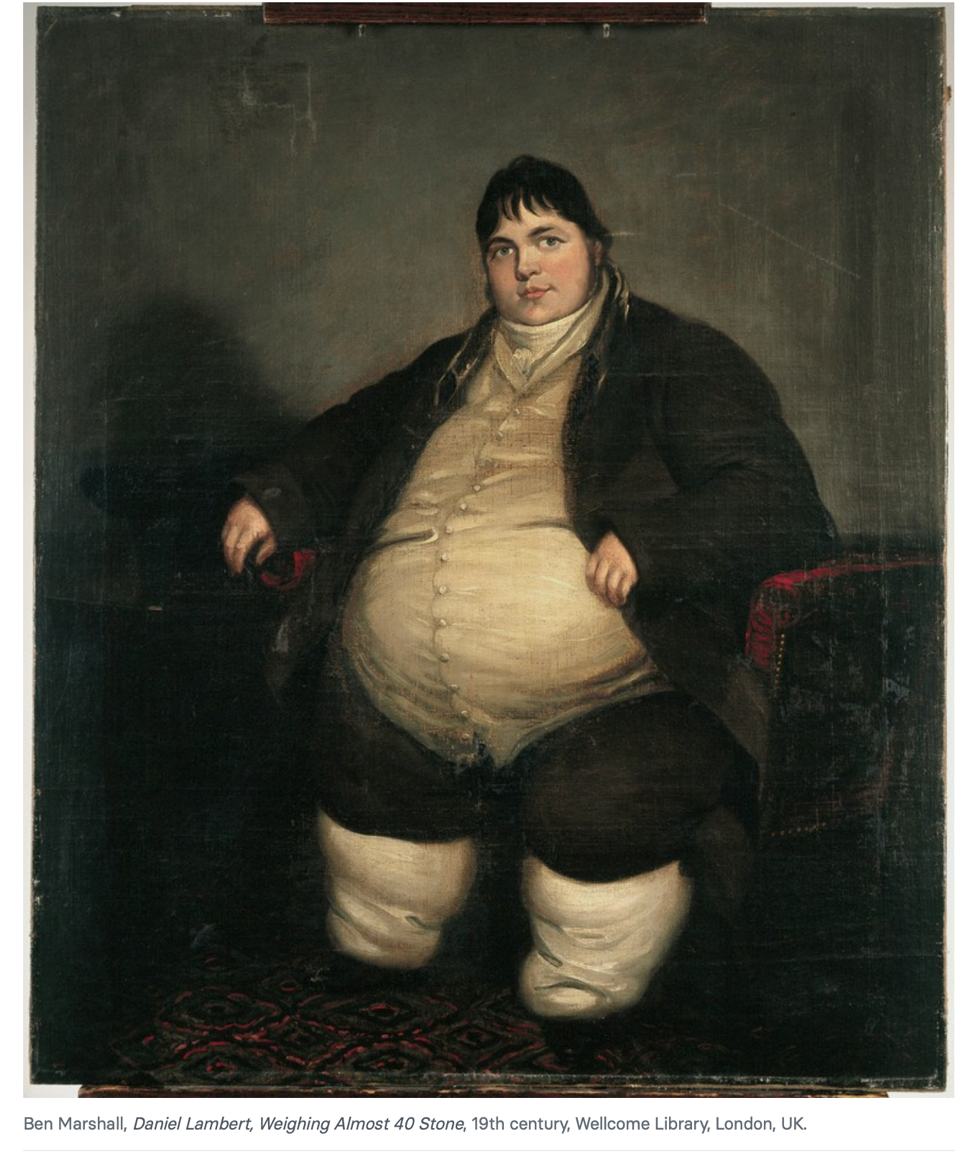
In the 1700s, Daniel Lambert’s morbid obesity made him rich and famous – so unique was his spectacular bulk at that time, that the curious would travel from afar and pay a shilling (= 5 pence) just to glimpse his ample form. In my childhood, though long dead, he was still considered Leicester’s most famous man and featured on numerous emblems for the city.
But in 2026, this man would be far from unique, and certainly not considered the “freak” which he was then. Rising levels of obesity in the population, especially in the young, mean that we are witnessing rocketing levels of associated comorbidities such as diabetes and cardiovascular disease.
So how do we encourage people to make positive lifestyle changes at an earlier stage to combat these trends…. and to lose weight if possible?
Imagine Daniel comes to see you for a health review and tells you he has knee pain. It’s been more than 10 years since he was last seen. After examining him, you strongly suspect that osteoarthritis is to blame.
How would you manage him and broach the subject of his weight? What words would you use? Would it be an easy discussion to have? How would you motivate him?
Which of the following phrases would be appropriate to use after the examination of Mr Lambert’s knees?
1. I think the knee pain is caused by osteoarthritis probably related to your high BMI*.
2. I think the knee pain is caused by arthritis. It’s not surprising given your weight!
3. I think you have arthritis in your knees, and your fatness is making the pain worse.
4. I think your obesity is making your knee pain worse.
5. What were you thinking might be the cause for your knee pain?
6. I suspect you might have some wear and tear in your knees… what were your thoughts?
* Body-Mass Index
To motivate change and get a patient on side, we need to use positive language which is non-judgemental.
Phrases 1-4 are likely to be taken negatively:
I think… needs to be used judiciously and with care in its tonal delivery. Used too often and it can sound patriarchal. Furthermore, High BMI and obesity are medical terms that some patients won’t understand, and to say someone is fat is likely to offend them!
Gentler ways of addressing obesity might be to use synonyms such as:
(a bit/slightly/rather) overweight, large or chunky – delivered with appropriate intonation.
Eliciting ideas, concerns and expectations is very much the heart of the patient-centred consultation, and using questions will enable your patient to express their feelings on the subject. Perhaps they will agree with your thinking… but if not, it will enable you to discuss their thinking/concerns before moving onto your own ideas.
So, in responding to phrase (question) 5. Daniel might say “Could it be arthritis? It runs in the family… I suspect my weight doesn’t help either…” In which case, he’s already made the link between worsening pain symptoms and weight, and you can confidently follow up with:
“Have you thought about / tried losing weight? Shall we book a follow-up appointment to talk about that?”
Positive lifestyle change = a deliberate change in your daily habits that improves your physical, mental or emotional well-being; positive language = affirmative language that focuses on solutions and what can be done; broach a subject = to start to discuss a delicate subject; to offend someone = to make someone upset/angry through words, actions or behaviour.
Take home points:
- Encouraging patients to change their behaviour is not easy and phrasing needs to free of criticism and pejorative terms that are likely to offend. Intonation is everything.
- Use language that patients can understand and avoid medical jargon unless absolutely necessary. Be prepared to explain the terms if needed.
- Know some familiar and gentler synonyms for common medical terms.
- Ask about ideas and concerns at least before attempting any explanation.